Table of contents
Overpacked suitcases, forgotten essentials, and “why did I bring this?” moments are not just travel clichés, they are the quiet tax many people pay before even reaching the airport. As airlines keep tightening baggage rules, and as more travelers mix work trips with weekend escapes, packing has become a small logistics problem with real costs. From checked-bag fees to missed trains because someone had to repack on the platform, the stories add up, and the lessons are often learned the hard way.
The overpacking spiral starts at home
Everyone thinks they will be the exception, and then the suitcase zipper tells the truth. In surveys of U.S. leisure travelers, packing stress routinely ranks among the most common pre-departure anxieties, and the reasons are predictable: fear of being unprepared, uncertainty about weather, and the fantasy that you will “definitely” go for a run, a fancy dinner, and a spontaneous hike on the same three-day trip. The result is the classic spiral, extra shoes “just in case,” bulky toiletries that could have been decanted, and duplicates of items you already packed because you stopped trusting your own checklist.
The costs are not theoretical. Many major airlines use a 23 kg limit for standard economy checked baggage on international routes, and a frequent trigger for fees is not the number of items but the density of the wrong items, jeans, sweaters, hardback books, and full-size liquid bottles that quietly push the scale past the line. Travelers often confess that the tipping point was something absurdly small: one extra jacket, a stack of souvenirs bought at the last minute, or a laptop charger that was packed “somewhere safe” and then repurchased on arrival. A practical fix that seasoned flyers repeat is to pack to a plan rather than to a mood: pick a color palette, limit shoes to two pairs, and build outfits that recombine, then weigh the bag at home because the airport scale is the most expensive place to learn arithmetic.
The deeper mistake, though, is psychological: packing becomes a way to control uncertainty, and people compensate by bringing objects instead of information. A look at the forecast, a quick scan of dress norms, and a realistic itinerary often saves more space than any compression cube. If you know you will spend most days walking and most evenings in casual restaurants, you can stop packing for an imagined gala. If you know laundry is available, you can stop packing for two weeks when you are traveling for seven days. Overpacking feels like prudence, yet in practice it turns every move, from a crowded metro to a cobblestone street, into a slow-motion penalty.
The “I’ll buy it there” trap
Minimalism can backfire, and the stories are painfully consistent. People arrive without a travel adapter, without appropriate medication, or without weather protection because they assumed a quick purchase would solve it, only to discover that the nearest store is closed, the product standards differ, or the price is steep in tourist zones. The phrase “I’ll grab it at the airport” is another classic confession, because airports are designed for convenience, not value, and a forgotten basic can cost three times what it would at home.
This problem gets sharper when travelers move across very different retail ecosystems. Japan, for example, is famous for convenience stores, pharmacies, and meticulous everyday goods, yet visitors still lose time hunting for the right item because of language, unfamiliar brand names, or the simple disorientation of arrival. A traveler who forgets a specific cable, a particular skincare product, or an over-the-counter medicine they rely on might find alternatives, but not without effort, and not always with clear instructions. That is where preparation beats improvisation: note the generic name of medicines, photograph the label of anything you might need to replace, and store key documents and reservations in two places, your phone and the cloud, because dead batteries and lost devices are also part of the “I’ll manage” mythology.
Planning does not mean hauling half your bathroom across borders. It means knowing what is easy to source and what is not, and that requires a bit of local intelligence. If you are building an itinerary, checking transport links, neighborhood bases, and practical travel norms before you pack, you avoid the domino effect of mistakes, especially in countries where your daily rhythm depends on trains, timed entries, and early starts. For travelers mapping a first trip, try these out, because having a clearer sense of where you will be, and how you will move, makes it far easier to pack only what your actual days demand.
Security lines expose the messy bag
Nothing reveals bad packing faster than a security checkpoint. The most common confession is not about forgetting liquids, it is about burying them. Travelers dig through layers, hold up the line, and discover that the “small bottle” is 120 ml, or that the laptop was packed under a tangle of cables and snacks. In the United States, the TSA’s 3-1-1 rule for carry-on liquids is widely known, yet still regularly violated, and European airports apply similar constraints even when exact procedures differ by location. The pattern repeats: rules are easy to read, yet stress makes people pretend they can outsmart them.
A second frequent mistake is treating a carry-on like a storage closet. Too many devices, too many power banks, and too many “just in case” items create confusion at inspection, and they increase the chance that something gets left behind in a tray. Travelers who have been burned by that moment, passport in one hand, phone in another, boarding pass slipping away, often change their system permanently: one pouch for electronics, one clear bag for liquids, and one easily accessible folder for documents. It is not glamorous, but it is the difference between walking through security in two minutes and sweating through your shirt as the line hardens behind you.
The smartest packing strategy for checkpoints is also a strategy for the whole trip: treat your bag like a working space. Keep high-turnover items, water bottle, sanitizer, pen, and charging cable, in the same pocket every time, and you stop losing them. Keep a light layer accessible, and you stop unpacking your entire bag because the plane is cold. Put anything that could be questioned, sharp items, large tools, unusual food, in checked luggage if you can, and you reduce the chance of a long conversation with security staff in a language you do not speak fluently. Packing is not only about space; it is about speed under pressure.
Souvenirs: the return-trip ambush
The outbound flight is rarely the problem; the return trip is where discipline collapses. Travelers swear they packed perfectly, and then they meet local craft markets, duty-free aisles, and the temptation of gifts. The “return-trip ambush” is a classic because it combines optimism and poor math: people assume they will “make it fit,” and they underestimate how bulky boxes, fragile items, and winter clothing become once folded. In Japan, the temptation is especially strong because packaging is beautiful and food souvenirs are ubiquitous, from sweets to regional specialties that come in structured boxes that refuse to compress.
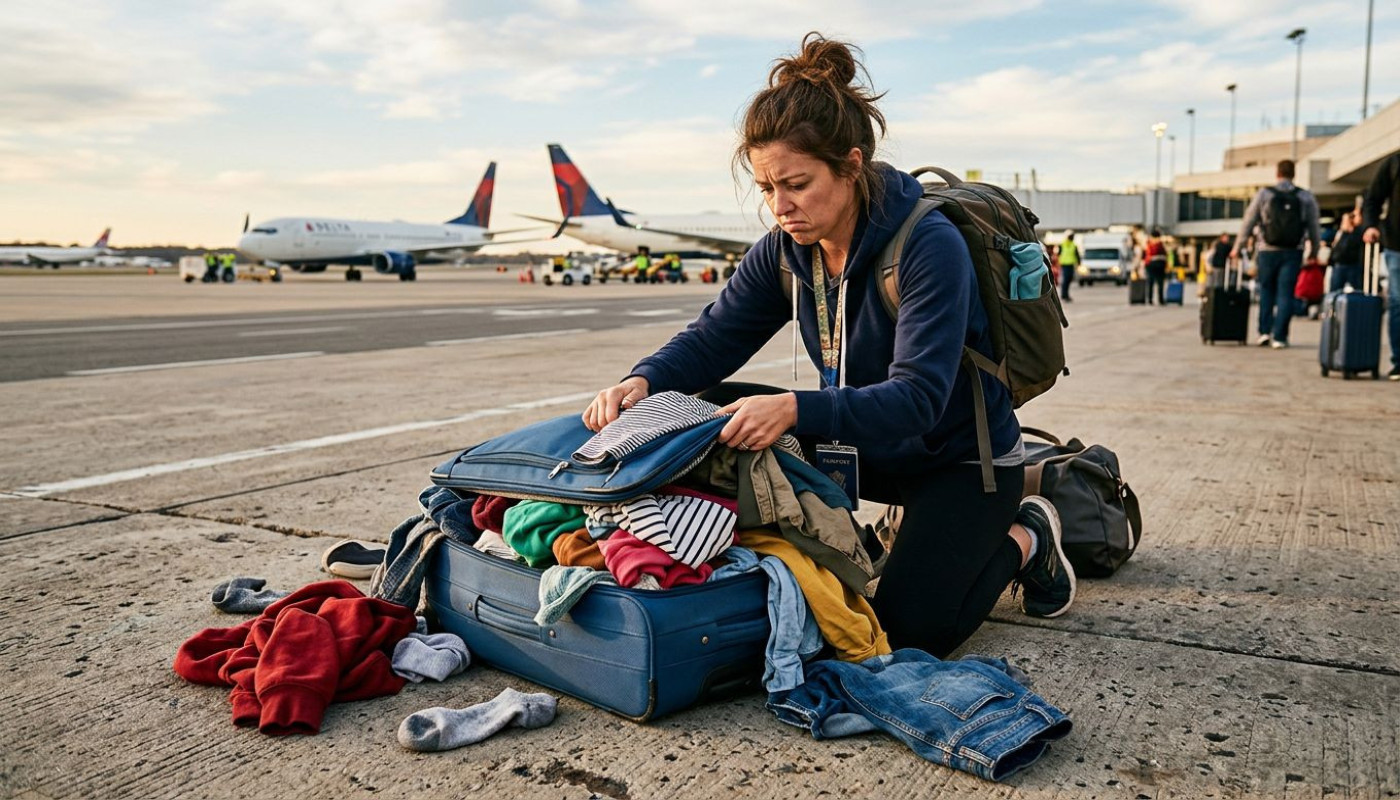
The financial consequences can be immediate. Airlines typically enforce size and weight limits more strictly on busy routes, and exceeding a checked bag limit can mean paying an overweight fee or, in some cases, moving items into a new bag, which is effectively paying for a second checked piece. Travelers often end up in an airport corner, ripping open packages, stuffing jackets into tote bags, and handing chocolates to strangers. The mistake is not buying souvenirs, it is failing to plan for them. A simple rule helps: leave 20% of your bag empty on departure, or bring a foldable duffel for soft items, then keep fragile purchases for carry-on where possible.
There is also a subtle safety issue. Overloaded bags invite theft and loss because you juggle more items, and you become less aware of what you are carrying. A second tote, a third shopping bag, and a duty-free sack create distraction in crowded stations and airports. Travelers who have dealt with a lost bag often adopt a more conservative approach: keep essentials, one change of clothes, medications, valuables, in carry-on, and treat checked luggage as replaceable. That mindset makes souvenir shopping more rational, because it forces you to prioritize what you truly want, not what is merely available in front of you.
How to pack smarter before you book
Book with baggage in mind, set a realistic budget for fees, and check whether your ticket includes checked luggage or only a personal item. If you plan to shop, reserve a luggage upgrade in advance because it is usually cheaper. In some destinations, tax-free shopping and shipping services can help, but you need time and receipts, so plan it early.
On the same subject